

VILLA MABROUKA, TANGIER: A SUMMER ESCAPE BECOMES INSPIRATION

Some places are remembered not for a single detail, but for the way their architecture, colours, textures and atmosphere come together. Villa Mabrouka is one of them.

Located close to Tangier’s Kasbah and Medina, the intimate hotel occupies a 1940s modernist house surrounded by one of the city’s most remarkable gardens. Once the secluded sanctuary of Yves Saint Laurent and Pierre Bergé, the property was later transformed into a 12-room hotel by British designer Jasper Conran, who preserved its history while introducing his own understated approach to design and craftsmanship.
The result is a house where different cultures and periods coexist naturally. Clean modernist lines meet Moroccan lanterns, carved fretwork, antique embroideries, rattan, marble and historic tiles. Black-and-white floors create a precise architectural rhythm, while palms, painted doors and jewel-toned details introduce colour and movement. Large windows connect the interiors with the surrounding vegetation, sea and intense blue sky.

The gardens are an essential part of this identity. Originally designed in the early 1990s by landscape designer Madison Cox under the guidance of Saint Laurent and Bergé, they unfold across cascading terraces overlooking the Strait of Gibraltar and the North Atlantic. Palms, bamboo, citrus trees, roses and bougainvillea surround pavilions and pools, including an emerald-tiled plunge pool that appears to merge with the landscape.
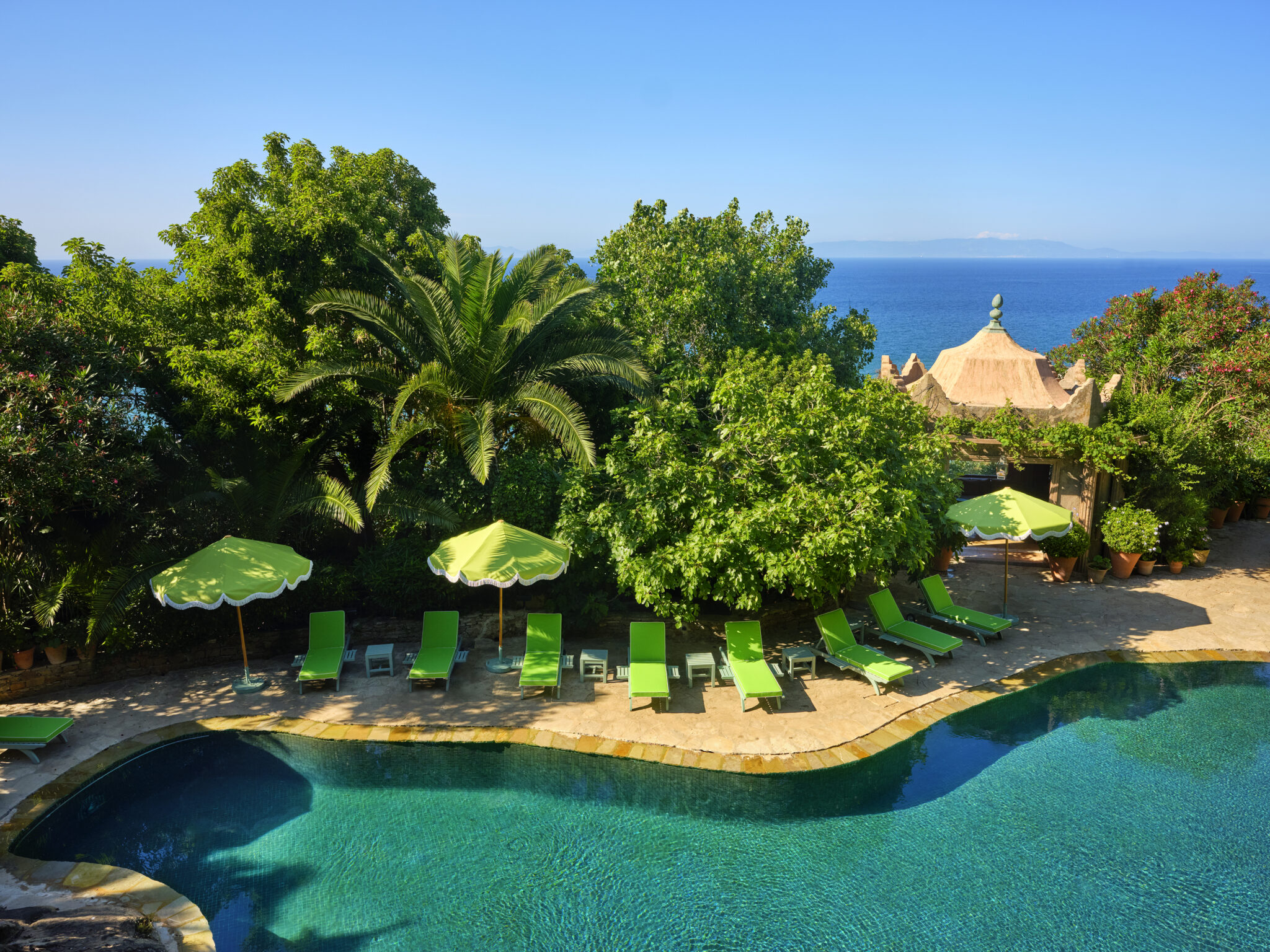
For Mariano Moreno, places like Villa Mabrouka are not approached as references to be reproduced literally. Their influence lies in the way they sharpen the eye. A tiled floor may suggest a textile rhythm; a painted surface may reveal an unexpected colour combination; the contrast between rigorous architecture and uncontrolled vegetation may inspire a new relationship between structure and movement.


This dialogue between past and present also reflects the creative philosophy of the house. Villa Mabrouka has evolved without erasing its memory. Its modernist architecture, Moroccan craftsmanship and contemporary interiors remain distinct, yet together they create a coherent identity. In a similar way, Mariano Moreno combines traditional couture techniques with experimentation, transforming craftsmanship into a contemporary language.
Tangier strengthens this creative encounter. The city’s whitewashed architecture, international history and artisanal culture have long attracted artists, designers and travellers. Within the Medina and its surroundings, traditional weaving, textiles and craftsmanship remain part of everyday life, establishing a direct relationship between material, technique and cultural memory.

Within this visual story, the Poppy look from the GROUNDBREAKING Bridal 2027 collection becomes a natural counterpoint to Villa Mabrouka. The connection is conceptual rather than literal. Its vivid red flowers, geometric textile surface and elongated train reflect the same tension visible throughout the villa: nature organised through design, organic beauty contained within a carefully constructed form.

In Poppy, flowers are not simply printed onto the dress. They become part of its texture and architecture. The fitted silhouette gives way to a sweeping train that extends across the ground like a cultivated landscape, while the intensity of the red blossoms stands in contrast to the depth of the surrounding greenery. The result is a bridal look in which nature, craftsmanship and structure exist as a single composition.
Villa Mabrouka is ultimately a reminder that inspiration often begins with attention. It can emerge from the shadow of a palm, the geometry of a floor, the colour of a pool or the dialogue between a historic interior and a living garden.
A summer escape therefore becomes part of the creative process—not because the destination must be recreated, but because it offers a renewed way of seeing.
